Quick answer
- The Arizona bark scorpion is the only scorpion of medical concern in the U.S., and it lives in parts of Nevada.
- Bark scorpions climb. They hide in hollow block walls and wall voids and get in under doors, through vents and weep holes.
- Sealing gaps, door sweeps, screens and clearing clutter work better than spraying alone.
- In an empty house, scorpions can end up trapped in sinks and tubs, so check with a UV light when you get home.
- If someone is stung, call Poison Control. For a child under 9, call 911.
Which scorpions live in Las Vegas?
There are more than 50 scorpion species in the desert southwest states, according to University of Arizona Cooperative Extension. Three you may meet around a Las Vegas home are below. Only one of them is a health concern.
| Scorpion | What it looks like | Why it matters |
|---|---|---|
| Arizona bark scorpion | Adults 2 to 3 inches, slender pincers and a long, thin tail. Colour varies from pale to darker with stripes. | The only scorpion of medical concern in the U.S. A climber that lives around buildings and colonizes small parts of Nevada. |
| Giant hairy scorpion | The largest U.S. scorpion, heavy bodied, adults often over 5 inches. | Mild venom. Found in the Mojave Desert areas of Nevada. Lives under rocks and in shallow burrows, and eats bark scorpions. |
| Yellow ground scorpion | Under 3 inches, with a wider, bulkier tail than a bark scorpion. | A burrowing scorpion reported in Nevada, often mistaken for a bark scorpion. |
The same extension publication cites a national study (Kang and Brooks, 2017) that recorded about 170 scorpion stings per 100,000 people in Las Vegas, listed with Phoenix, Tucson, El Paso, Oklahoma City and Tulsa among the cities with high sting rates.
Why scorpions in Las Vegas end up indoors
The bark scorpion is a home scorpion. Extension researchers found it common around buildings of all kinds in low desert areas, and often associated with homes and hollow-block perimeter walls. In one study, 95% of bark scorpions chose hollow block walls over every other hiding place around the house. Anyone with a block wall around the back yard in Henderson, Summerlin or Centennial Hills knows exactly what that looks like.
- How they get in: under and around poorly fitted doors, through window vents, under exterior walls with openings, and through weep holes in the weep screed at the base of stucco walls.
- Once inside the walls: they move through the building and come out around electrical faceplates and pipe collars.
- They climb: across floors, up textured walls and along ceilings. They can fall from ceilings and end up stuck in sinks and bathtubs they cannot climb out of.
- What they eat: crickets, cockroaches and other insects. A cricket or cockroach problem means more scorpions indoors.
- Water: they drink from small pools of standing water, and move when irrigation or monsoon rain floods them out of their hiding places.
When they are active
University of Arizona Extension says bark scorpions are active for most of the year in low desert areas, and nights above 70°F suit them best. Most movement happens between 7 and 11 p.m. and again from 3 a.m. to sunrise. From November to March they are less active, and in the coldest spells they cluster in groups in protected, undisturbed spaces. Those groups often turn up when a block wall is taken down or a wall is opened during a remodel.
Ground work disturbs them too. Extension notes they often relocate when earth is moved for building or landscape changes, which is worth knowing if new homes are going up next to you in Skye Canyon or Inspirada.
How to keep scorpions out of your house
Both University of Arizona Extension and Poison Control say spraying on its own will not solve a scorpion problem. Pest-proofing the house is, in the extension's words, by far the most effective way to reduce scorpion contact. This is the list I work from.
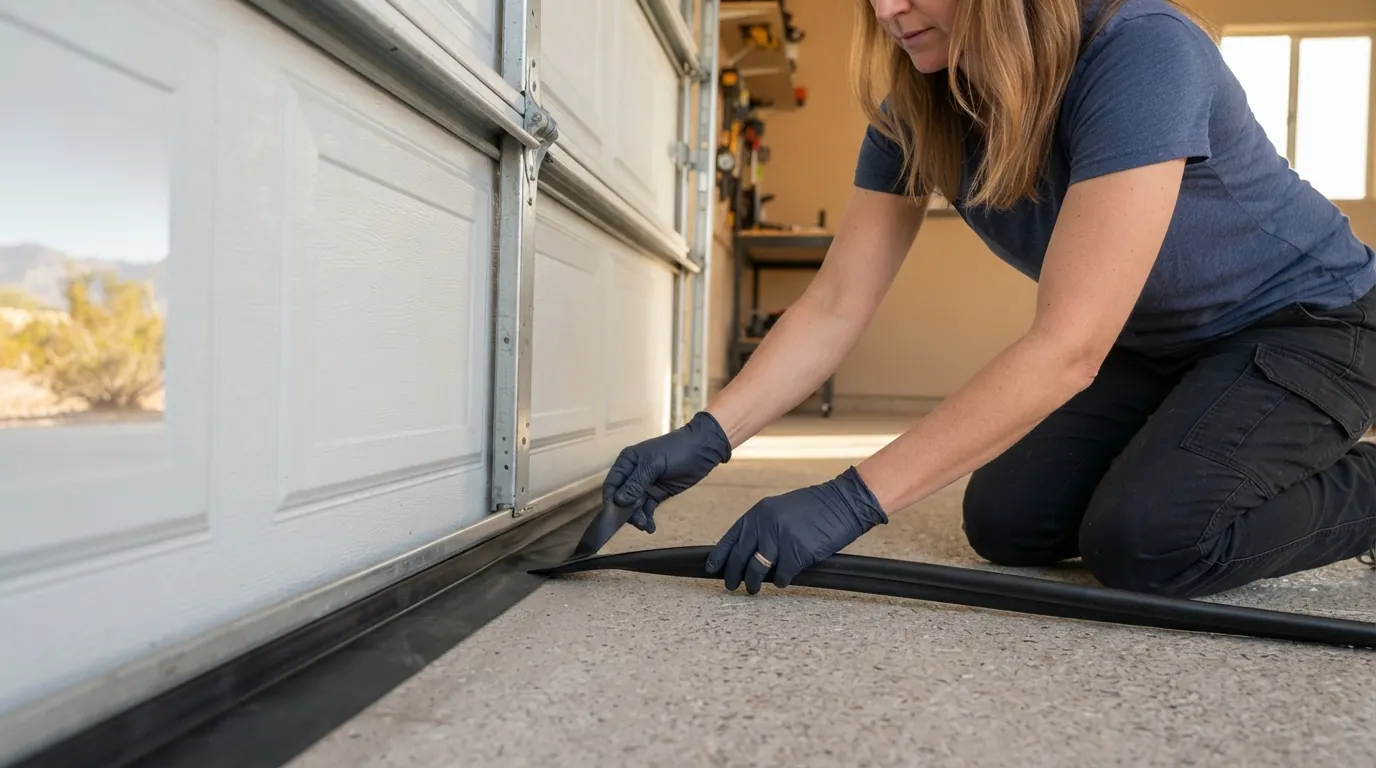
- Fit weather-stripping around doors and windows, and make sure door sweeps are tight with no gaps.
- Screen weep holes with coarse steel mesh. Do not plug or seal them, because they ventilate the wall.
- Caulk around roof eaves, pipes and anywhere a line enters the house.
- Keep window screens repaired and tight in their frames.
- Stucco and cap hollow block walls, which makes them less inviting.
- Do not let wood, rocks, clutter or debris build up against the house, and do not store firewood inside or against the walls.
- Prune bushes and tree branches away from the house. Branches give scorpions a path to the roof.
- Keep garbage containers raised off the ground in a frame.
- Keep shoes off the floor, and do not leave towels or clothes lying on the floor indoors or out.
- Check the house with a UV (black) light at night. Scorpions glow under it and are easy to spot. Never look directly into the light.
If you keep finding scorpions inside, extension advice is to call a pest management professional with scorpion experience. Many offer pest-proofing as a service. Cutting down crickets and other insects helps, but it will not remove scorpions on its own.
Scorpions and a house that stands empty
Snowbirds, second-home owners and anyone away for the summer ask me about this. An empty house is quiet and undisturbed, which is what scorpions look for. Nobody is there to notice one in the tub, and the first person in after weeks away is often walking around barefoot in the dark. A few habits make a real difference.
- Before you leave, seal the gaps on the list above, and put shoes, towels and laundry off the floor.
- Keep your pest control service on its normal schedule while you are away, and make sure someone can let them in.
- Fix dripping outside taps and leaking drip lines. Standing water near the house draws them in.
- After a monsoon storm, expect more movement, because rain floods them out of their hiding places.
- When you get back, check sinks, tubs, shoes and bedding before you settle in, ideally with a UV light after dark.

On my home checks I look in the sinks and tubs, check door sweeps and screens, note any scorpions or insect activity and send you photos, so you know what is going on before you fly home. Tell me what you need and I'll call you back.
If someone is stung
I am not a medical person, so I will only pass on what the official sources say about who to call. Poison Control says most stings can be managed at home with guidance from a poison center, so call Poison Control straight away for advice. University of Arizona Extension says a sting to a child under 9 should be treated as serious, and caregivers should call 911. Poison Control also notes that serious effects are usually limited to very young children.
Pets are at risk too. Extension notes that cats are not immune to the venom. If you are away and want someone checking on the animals at home, see pet sitting in Las Vegas.
Questions
Are there scorpions in Las Vegas?
Yes. The Arizona bark scorpion colonizes parts of Nevada and is common around homes and block walls in the low desert. Giant hairy and yellow ground scorpions are also found in Nevada.
Which scorpion in Las Vegas is dangerous?
University of Arizona Extension says the Arizona bark scorpion is the only scorpion of medical concern in the U.S. Other native scorpions can sting, but their stings are not considered hazardous to health.
Why do I keep finding scorpions in my bathtub?
Bark scorpions climb walls and ceilings, can fall, and get stuck in sinks and tubs they cannot climb out of. Sealing gaps where they enter is the best long-term fix.
Will pest spraying get rid of scorpions?
Not on its own. Both Poison Control and University of Arizona Extension say spraying alone will not solve it, and pest-proofing the house works best.
When are scorpions most active in Las Vegas?
For most of the year, especially on nights above 70°F. They are less active from November to March, and most movement happens between 7 and 11 p.m. and from 3 a.m. to sunrise.
What should I do if I am stung by a scorpion?
Call Poison Control for advice. University of Arizona Extension says a sting to a child under 9 should be treated as serious and caregivers should call 911.