Quick answer
- Monsoon storms usually reach the valley in July and August; the flood district treats July through September as flood season.
- The main risks are flash flooding, gusty winds that can cause damage, hail and lightning.
- Typical homeowners insurance does not cover flood damage, according to the flood district. Ask your agent before summer.
- Before you leave: clear drains and yard debris, tie down or store patio furniture, set the irrigation clock to skip rain, and arrange checks after storms.
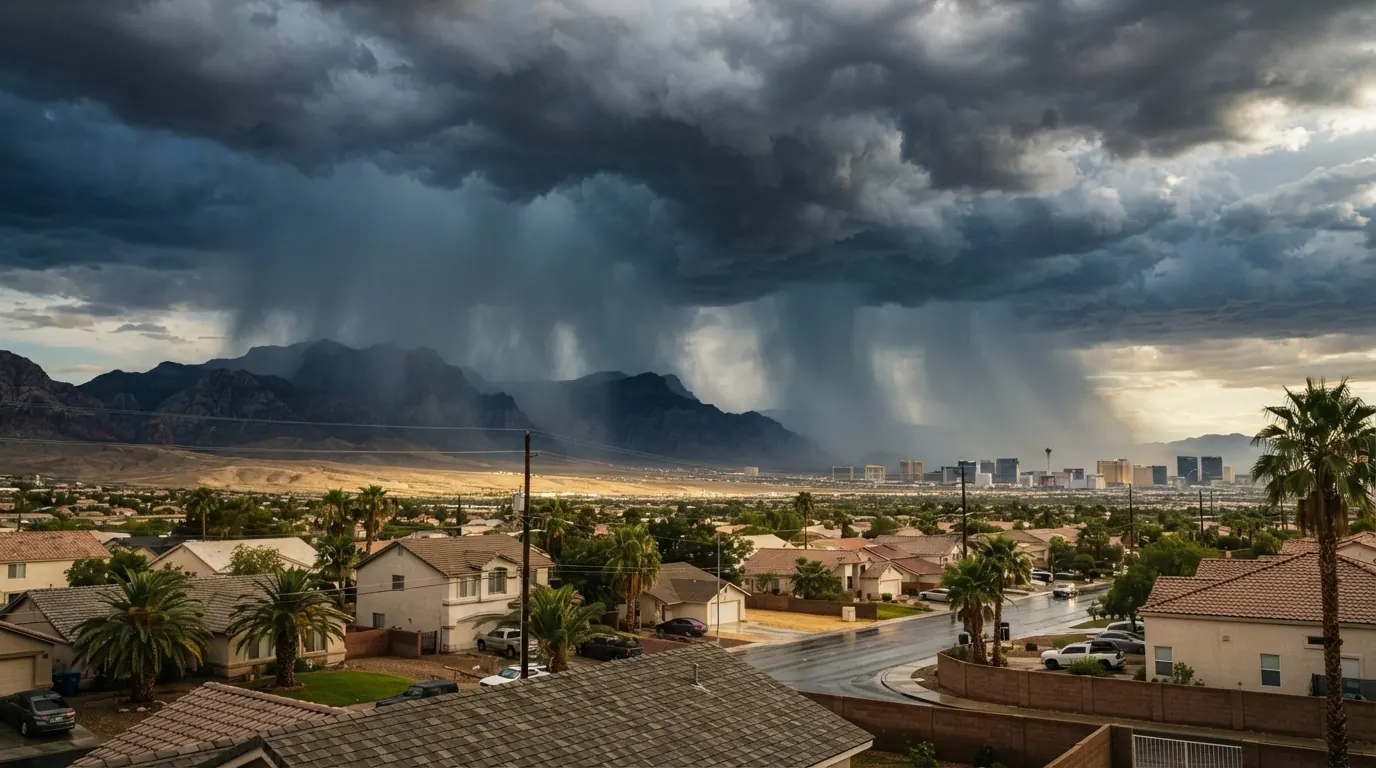
When is Las Vegas monsoon season?
The National Weather Service office in Las Vegas describes it simply: in the warm season, typically in July and August, a push of monsoon moisture moves into the Mojave Desert, bringing higher humidity and scattered thunderstorms. By September the monsoon typically wanes, and the first break from the summer heat arrives.
The Clark County Regional Flood Control District calls July through September the summer monsoon months and flood season. It says floods can and have happened in every month of the year, but the most damaging storms occur between July and September. Recorded reports of flooding in Clark County go back nearly 100 years.
| Source | What it says about timing |
|---|---|
| National Weather Service, Las Vegas | Monsoon moisture typically arrives in July and August and wanes by September. |
| Clark County Regional Flood Control District | July through September: expect sudden downpours and rapid flash flooding, even on sunny days. |
What a monsoon storm does to a Las Vegas home
The Weather Service says these storms usually form over the mountains around the valley and then move in. Its local spotter page lists what thunderstorms here can bring: flash flooding, damaging winds, hail and even tornadoes. The flood district adds that the storms often come with spectacular lightning, and that heavy rain on steep mountain slopes and hard desert ground runs off fast and collects in the built-up areas lower down.
- Water: the Weather Service says flash floods often sweep down normally dry washes or pour into low-lying areas. Yards, garages and side yards that sit low are where I see water collect.
- Wind: gusty storm winds can cause damage. Patio umbrellas, cushions, loose palm fronds and trash bins become projectiles in a back yard in Summerlin or Henderson.
- Hail and lightning: both are on the Weather Service list. Roofs, solar panels, skylights and pool equipment are the things to look at afterwards.
- Debris in the pool and drains: leaves, gravel and fronds block skimmers and yard drains, which is how a short storm turns into standing water.
- Pests on the move: University of Arizona Extension notes that bark scorpions move when monsoon rain floods them out of their hiding places. More on that in my guide to scorpions in Las Vegas homes.
Flood zones and insurance: what the flood district says
Many owners assume they are safe because they are not in a flood zone. The flood district says that even if you are not in a designated flood zone, your area can still flood. Subdivisions built after 1992 were designed to be protected from a 100-year flood, which is a flood with a 1% chance of happening in any given year, and the district notes that bigger floods have happened and will happen.
The district also says flood insurance is available to all residents whether or not the property is in a flood zone, and that typical homeowners insurance does not cover flood damage to the structure or belongings. I am not an insurance adviser. If you will be away all summer, read your policy and ask your agent what is covered before the season starts. The district's site has a flood zone lookup for your parcel.
Las Vegas monsoon checklist: before you leave for the summer
This is the list I go through with owners who leave in late spring or early summer and will be gone through the storm months. Most of it takes an afternoon.
- Clear gutters, roof drains, yard drains and any drain grates along side yards, so water has somewhere to go.
- Walk the back wall and side yards. Check where water would pool and keep that path clear of stored items.
- Put away or tie down patio furniture, umbrellas, cushions, planters and anything light. Close umbrellas fully.
- Bag lawn clippings, leaves and palm fronds and put them in the trash, not the street. The flood district asks this to keep debris out of storm drains.
- Have trees and palms trimmed before July, so dead fronds and weak limbs are gone before the wind arrives.
- Ask your pool service to keep its schedule and to tell you if a storm fills the pool with debris or the pump trips.
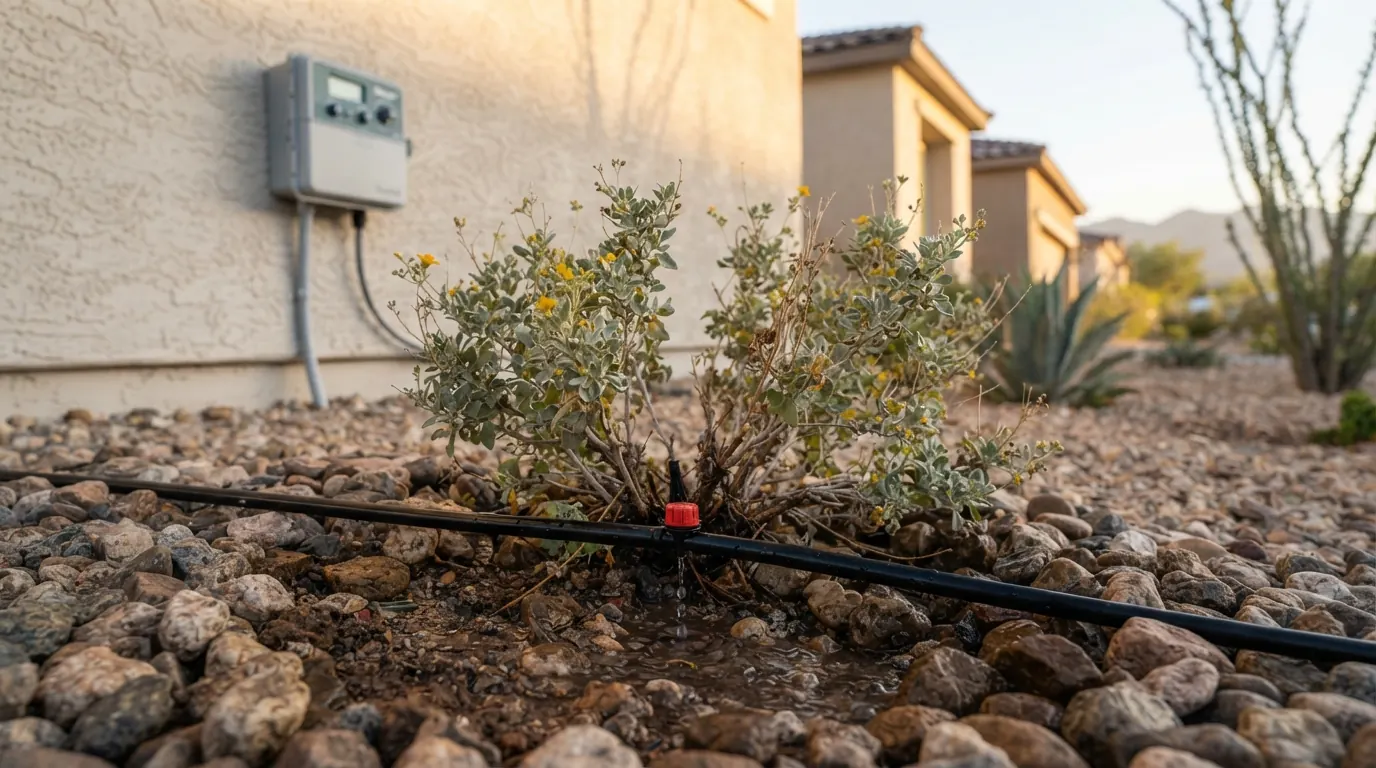
- Set your irrigation clock for the season, and if you can, use a smart controller. The Southern Nevada Water Authority advises turning the clock off on rainy days.
- Check door sweeps and window seals. They keep out wind-blown dust and rain, and scorpions too.
- Unplug electronics you will not need while you are away, as you would before any long trip.
- Read your insurance policy for flood and storm cover, and keep photos of the house as you left it.
- Arrange for someone local to check the house after every big storm, not just on a fixed day.
A storm can hit on a Tuesday afternoon and the damage sits there for weeks if nobody looks. When a storm rolls through, I can add a visit to your normal home checks: roof and yard from the ground, pool and drains, doors and windows, inside for leaks, with photos the same day. Tell me what you need and I'll call you back.
After a storm: what I check
- Water inside: ceilings, around windows and doors, the garage floor and anywhere near a low side yard.
- Outside: fallen branches and palm fronds, patio furniture moved by wind, block walls and gates.
- Pool: debris, skimmer and pump running, water level.
- Drains and gravel: washed-out areas, blocked yard drains, gravel pushed onto paths.
- Power: clocks and timers reset after an outage, including the irrigation controller and pool timer.
- Signs of pests after the rain.
Staying safe if you are home
The flood district's advice is plain. Most rainstorms last only a couple of hours, so if it is raining or flash floods are being reported, stay inside and wait to drive until the storm has passed. If you come to a flooded street, turn around. Six inches of water is enough to lose control of a vehicle, and one foot of water can float most cars. Washes, channels, detention basins and storm drains are no place to be, even when it is not raining.
If you are leaving for the whole summer, my checklist for leaving a Las Vegas home empty covers the AC, water and mail, and the Las Vegas watering schedule guide covers the irrigation clock.
Questions
When is monsoon season in Las Vegas?
The National Weather Service in Las Vegas says monsoon moisture typically arrives in July and August and wanes by September. The Clark County Regional Flood Control District treats July through September as flood season.
Does homeowners insurance cover monsoon flooding?
The flood district says typical homeowners insurance does not cover flood damage, and that flood insurance is available to all residents, in a flood zone or not. Ask your agent what your own policy covers.
My house is not in a flood zone. Can it still flood?
Yes. The flood district says areas outside designated flood zones can still flood, and that floods bigger than the 100-year design flood have happened and will happen.
What should I do with patio furniture before a monsoon?
Store it or tie it down before you leave, along with umbrellas, cushions and anything light. Gusty storm winds can cause damage.
Should I turn off my sprinklers when it rains?
The Southern Nevada Water Authority advises turning the irrigation clock off on rainy days, or using a smart controller that does it for you.
Who checks my house after a storm if I am away?
That is what home checks are for. I visit after a storm, look inside and out, and send you photos, so problems are caught early.
Sources
- National Weather Service Las Vegas: Climate of Las Vegas
- National Weather Service Las Vegas: SKYWARN spotter program (thunderstorm hazards)
- Clark County Regional Flood Control District: Flash Flood Safety
- Clark County Regional Flood Control District: Flash flood FAQs (flood zones and insurance)
- Clark County Regional Flood Control District: The 3 Ps
- Southern Nevada Water Authority: Watering tips
- University of Arizona Cooperative Extension: Scorpions of the Desert Southwest United States (AZ1768)